Communication
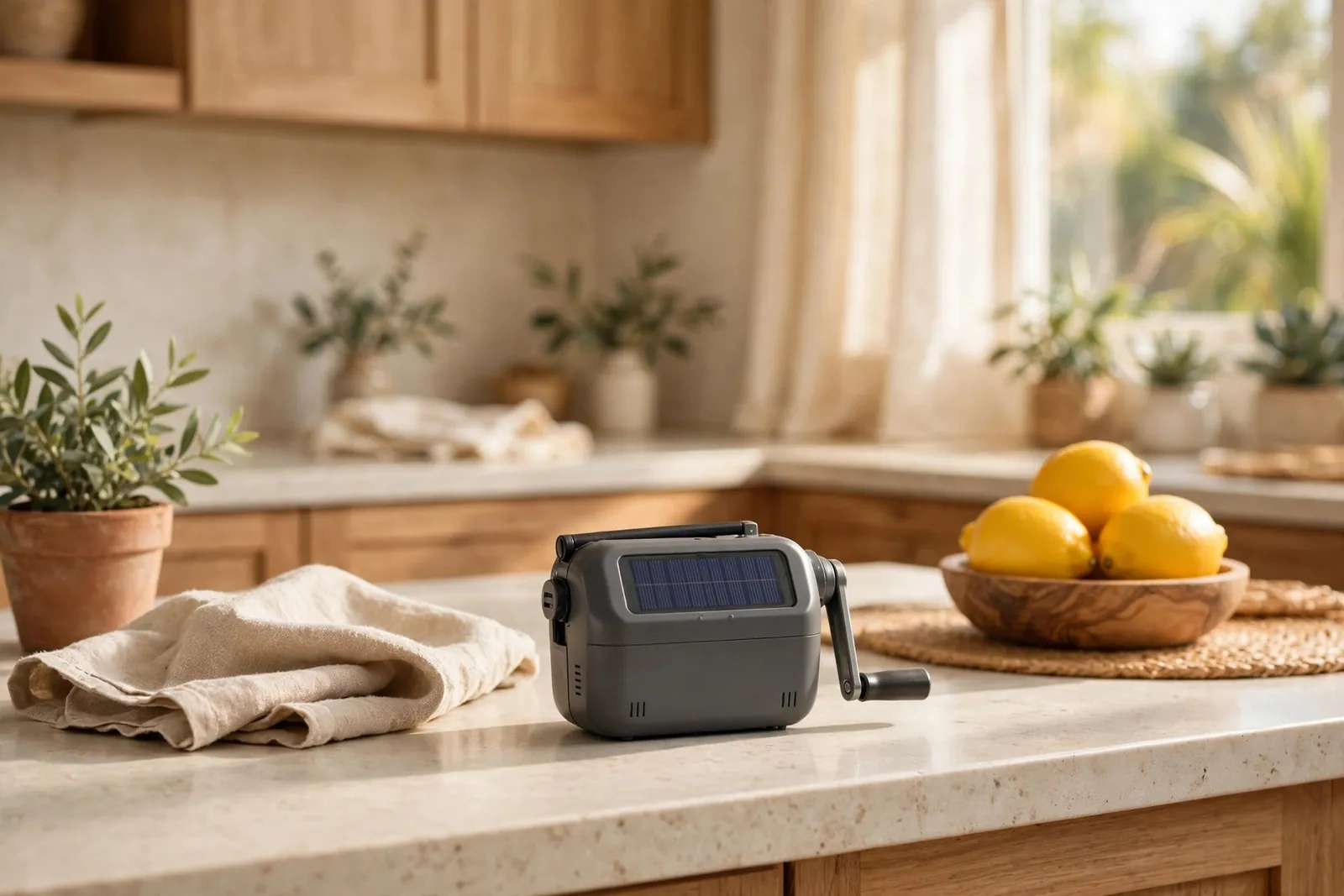
Hand-crank emergency radio
Worth it if your outages last days or you are in fire country. If your power comes back in hours, your phone and a charged power bank already do this job.
The six scores
- usefulness
- 4/5
- reliability
- 3/5
- ease
- 4/5
- durability
- 3/5
- portability
- 4/5
- value
- 4/5
What it is
A small AM/FM radio with the NOAA weather band, powered by a hand crank and usually a built-in rechargeable battery, a small solar panel and a USB port. Most include a flashlight. Prices run from the cost of a pizza to about three times that.
Why it is situational
When cell towers are overloaded or down, broadcast radio is how official information still reaches you: evacuation zones, shelter locations, boil-water notices, when the power is expected back. In a twelve-hour outage you will not need it; your phone, the utility app and a power bank cover that night. In a multi-day outage, a fire-weather shutoff or an earthquake, it earns its place, and it is cheap enough that most households should own one.
The honest limits: cranking to charge a phone is slow, a few minutes of talk time per minute of cranking at best, so treat the phone-charging feature as a last resort, not a plan. Keep real power banks for the phones and use the radio for the radio.
What to look for
- NOAA weather band and alert function, so it can wake you for a warning.
- A battery you can charge from USB at home, so it is full when the lights go out, with the crank and solar as backups.
- A battery indicator. Cheap models leave you guessing.
- A flashlight you would actually use, and a headphone jack so a kid can sleep.
- Physical, simple controls you can work in the dark.
How to use it
Charge it when you charge the kit, twice a year when the clocks change, and find your local stations once so the dial is already set. Write the station numbers on a piece of tape on the back. Keep it in the kit, not a drawer.
Skip it if
You live in an area with short, rare outages and you keep two power banks charged. Spend the money on the power banks first, then come back for the radio.
Sources
Last checked October 15, 2026