Power
Portable power station
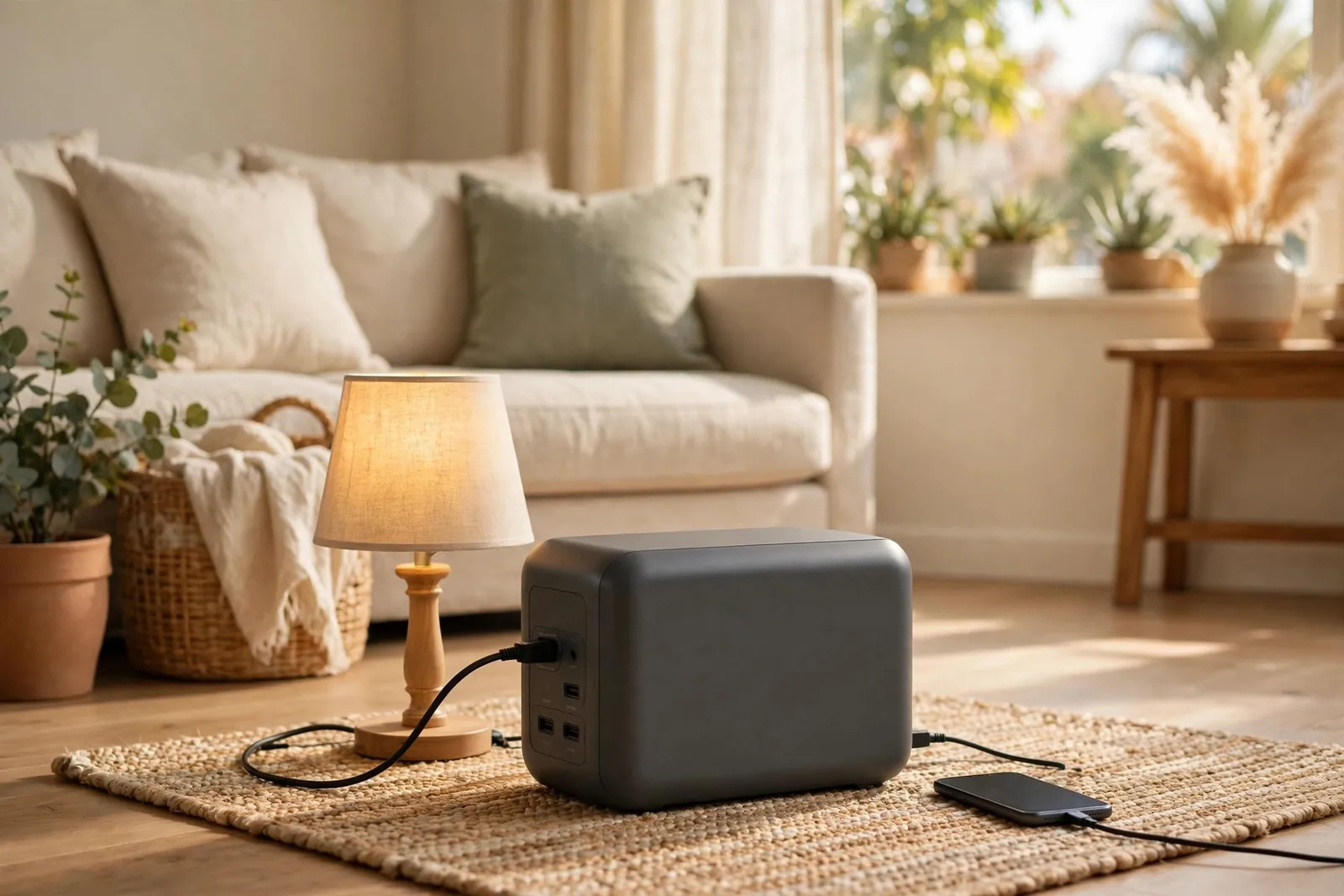
The backup power most households should buy before a generator. Silent, safe indoors, and it runs phones, lights, a router and a CPAP overnight.
The six scores
- usefulness
- 5/5
- reliability
- 4/5
- ease
- 5/5
- durability
- 4/5
- portability
- 3/5
- value
- 4/5
What it is
A large rechargeable battery in a box with wall outlets, USB ports and a 12-volt socket, from the size of a lunchbox to the size of a cooler. You charge it from the wall, the car or a folding solar panel. Capacity is sold in watt-hours; a few hundred watt-hours runs phones, lights and a router through a night, and around a thousand runs a fridge for part of a day.
Why it is first before a generator
It is silent, it has no exhaust, it can sit in the living room, and nobody has ever been poisoned by one. A gas generator makes more power but it has to run outdoors twenty feet from windows, it needs stored fuel that goes stale, and carbon monoxide from generators kills people in outages every year. For a household whose real needs are phones, lights, a CPAP and keeping the fridge cold, the power station covers it with none of the risk. The backup power guide ranks the whole list.
How to size it
Add up what you actually need overnight. A phone is a few watt-hours per charge. A lantern or a router is a few watts an hour. A CPAP without the humidifier runs around thirty to sixty watts. A fridge cycles on and off and is the thing that drains a small unit, so if the fridge matters, buy the bigger size and plan to run it in bursts. The spec sheet lists both capacity in watt-hours and output in watts; both have to be enough for what you plug in.
What to look for
- Lithium iron phosphate (LiFePO4) cells. They last several times more charge cycles than the older chemistry and tolerate heat better, which matters in a garage.
- Enough wall outlets and USB-C ports for your real devices.
- Pass-through charging, so it can charge from the wall while powering something.
- A solar input if you want days, not hours. A folding panel in full sun recharges a mid-size unit in most of a day.
- A handle you can lift. The big units are heavy; the portability score is a 3 for that reason.
How to use it
Charge it to full, store it between about half and full, and top it up every three months, or leave it plugged in if the manual allows. During a planned shutoff, charge everything from the wall first and save the station for the night.
Skip it if
Your outages are rare and short and your budget is tight. Two or three good power banks and a rechargeable lantern cover a night for a fraction of the price, and the station can come later.
Sources
Last checked October 15, 2026