Safety guide
Always know your exit.
The Urban Ninja field card: twelve small habits for restaurants, stores, transit, garages, events and hotels.
One page. Read it here, save the image to your phone, or print it for the fridge.
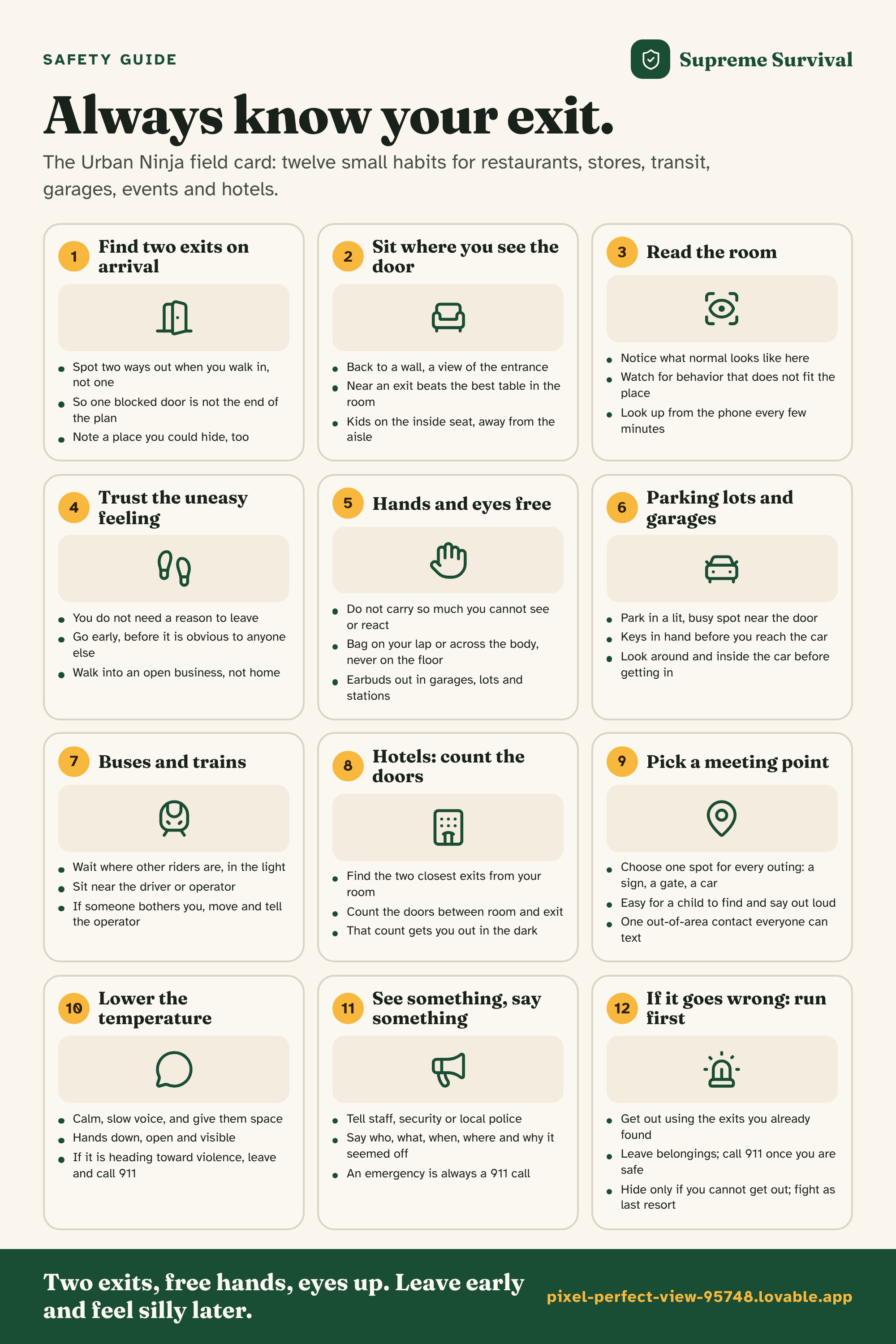
Most of staying safe in a city is noticing things a few seconds sooner than everyone else. None of this takes gear or training, just habits you can build on the next trip to the store. Here are the twelve that matter most, in the order you use them.
- 1
Find two exits on arrival
- Spot two ways out when you walk in, not one
- So one blocked door is not the end of the plan
- Note a place you could hide, too
- 2
Sit where you see the door
- Back to a wall, a view of the entrance
- Near an exit beats the best table in the room
- Kids on the inside seat, away from the aisle
- 3
Read the room
- Notice what normal looks like here
- Watch for behavior that does not fit the place
- Look up from the phone every few minutes
- 4
Trust the uneasy feeling
- You do not need a reason to leave
- Go early, before it is obvious to anyone else
- Walk into an open business, not home
- 5
Hands and eyes free
- Do not carry so much you cannot see or react
- Bag on your lap or across the body, never on the floor
- Earbuds out in garages, lots and stations
- 6
Parking lots and garages
- Park in a lit, busy spot near the door
- Keys in hand before you reach the car
- Look around and inside the car before getting in
- 7
Buses and trains
- Wait where other riders are, in the light
- Sit near the driver or operator
- If someone bothers you, move and tell the operator
- 8
Hotels: count the doors
- Find the two closest exits from your room
- Count the doors between room and exit
- That count gets you out in the dark
- 9
Pick a meeting point
- Choose one spot for every outing: a sign, a gate, a car
- Easy for a child to find and say out loud
- One out-of-area contact everyone can text
- 10
Lower the temperature
- Calm, slow voice, and give them space
- Hands down, open and visible
- If it is heading toward violence, leave and call 911
- 11
See something, say something
- Tell staff, security or local police
- Say who, what, when, where and why it seemed off
- An emergency is always a 911 call
- 12
If it goes wrong: run first
- Get out using the exits you already found
- Leave belongings; call 911 once you are safe
- Hide only if you cannot get out; fight as last resort
Two exits, free hands, eyes up. Leave early and feel silly later.
Get the free 72-Hour Readiness Plan
Sources
- FEMA / Ready.gov: Active shooter information sheet (Run, Hide, Fight)
- Ready.gov: Attacks in public places
- DHS: How to report suspicious activity (If You See Something, Say Something)
- CISA: De-escalation action guide
- U.S. Fire Administration: Hotel and motel fire safety
- San Diego Police Department: Personal safety and security tips
More guides
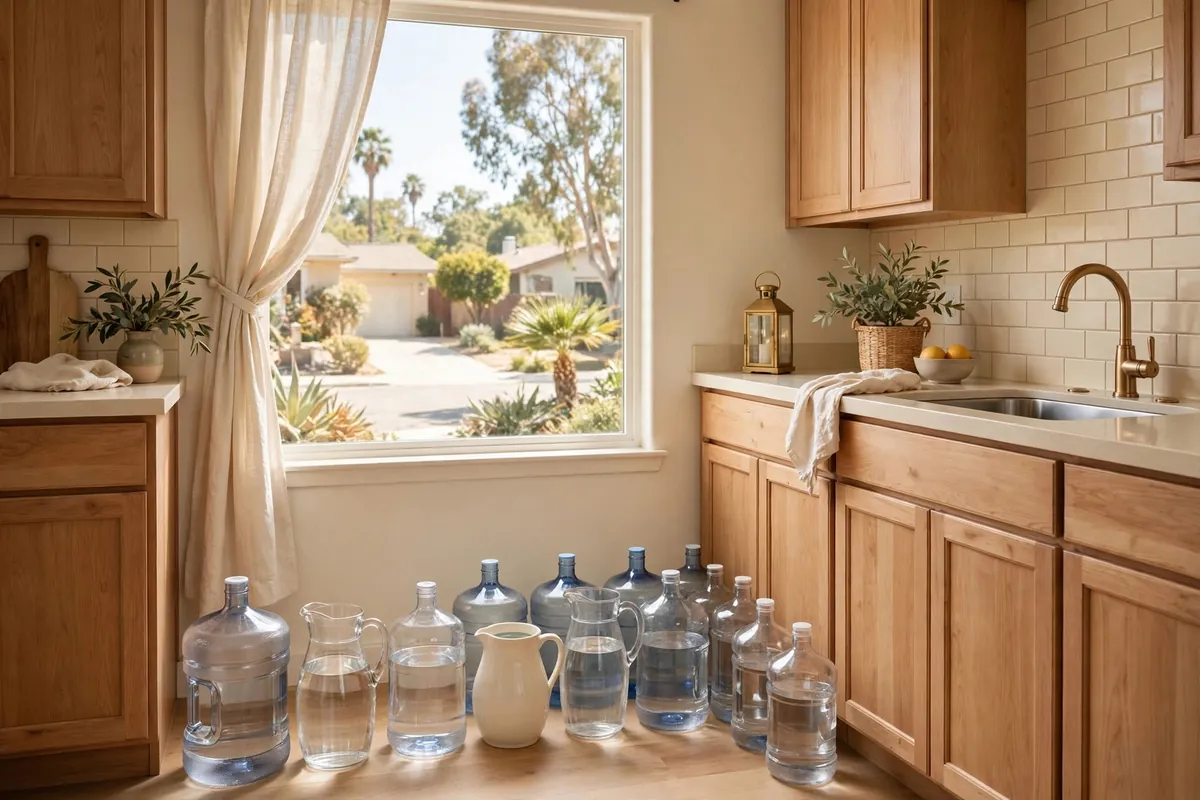
Home guide
A week without power.
How a normal household eats, stays clean, keeps cool or warm, and sleeps when the grid is gone for days.
Open the guide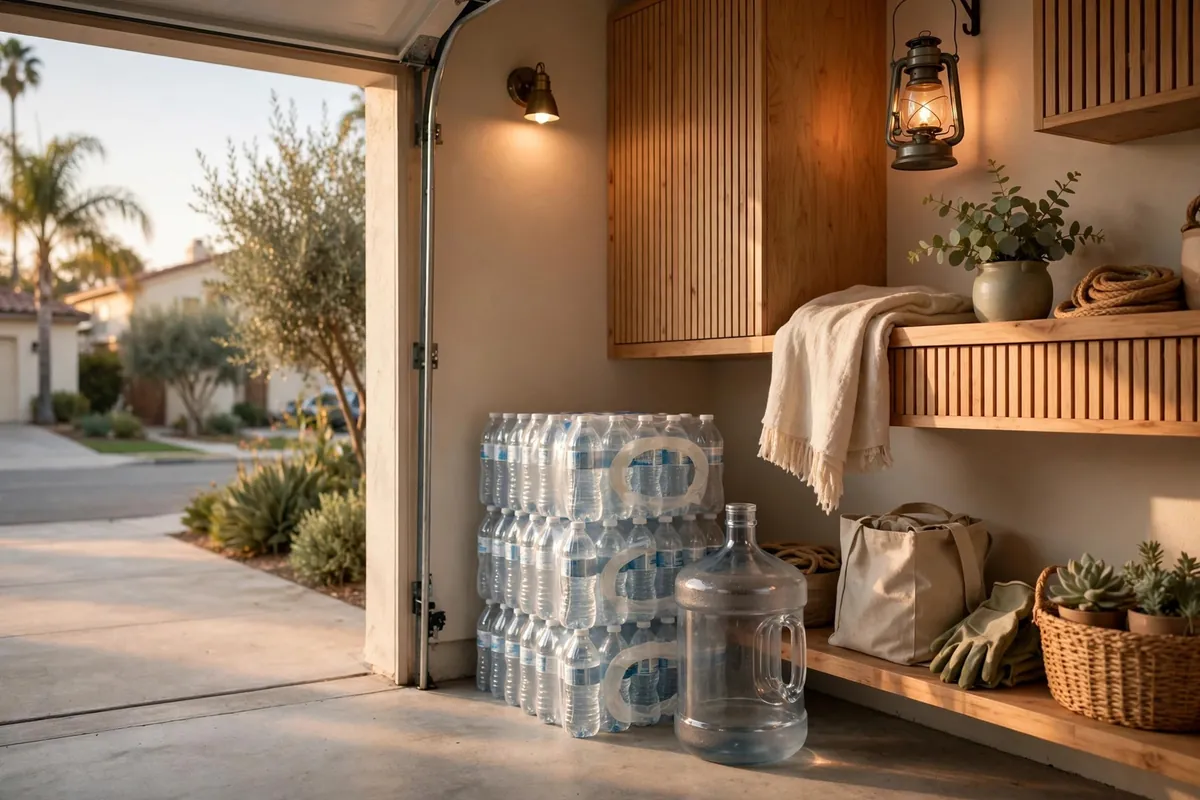
Kit guide
The 72-hour family kit, item by item.
Everything a household needs for three days with no help, and nothing it does not.
Open the guide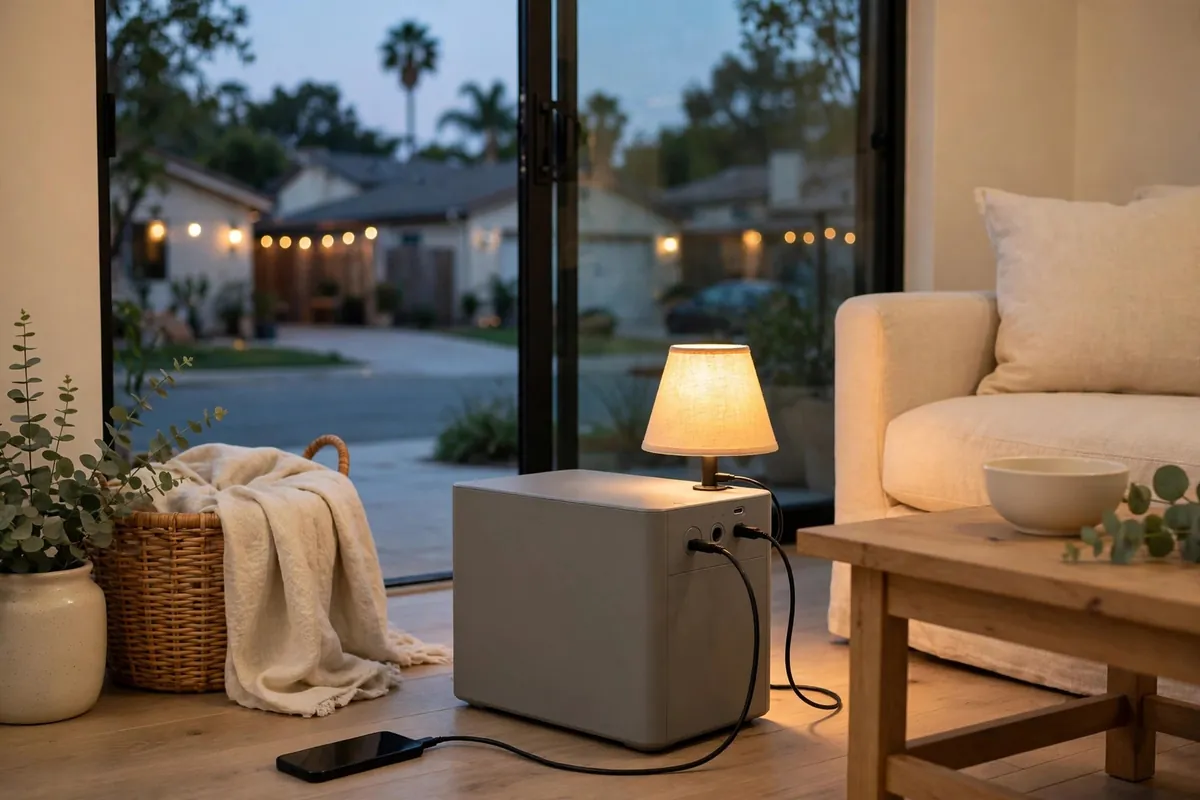
Gear Lab guide
Backup power, ranked by what actually works.
Twelve ways to keep phones, lights and a fridge going, from best to barely.
Open the guide