Health guide
The first aid kit, in buying order.
The Red Cross household list, sorted so the most-used and cheapest things come first.
One page. Read it here, save the image to your phone, or print it for the fridge.
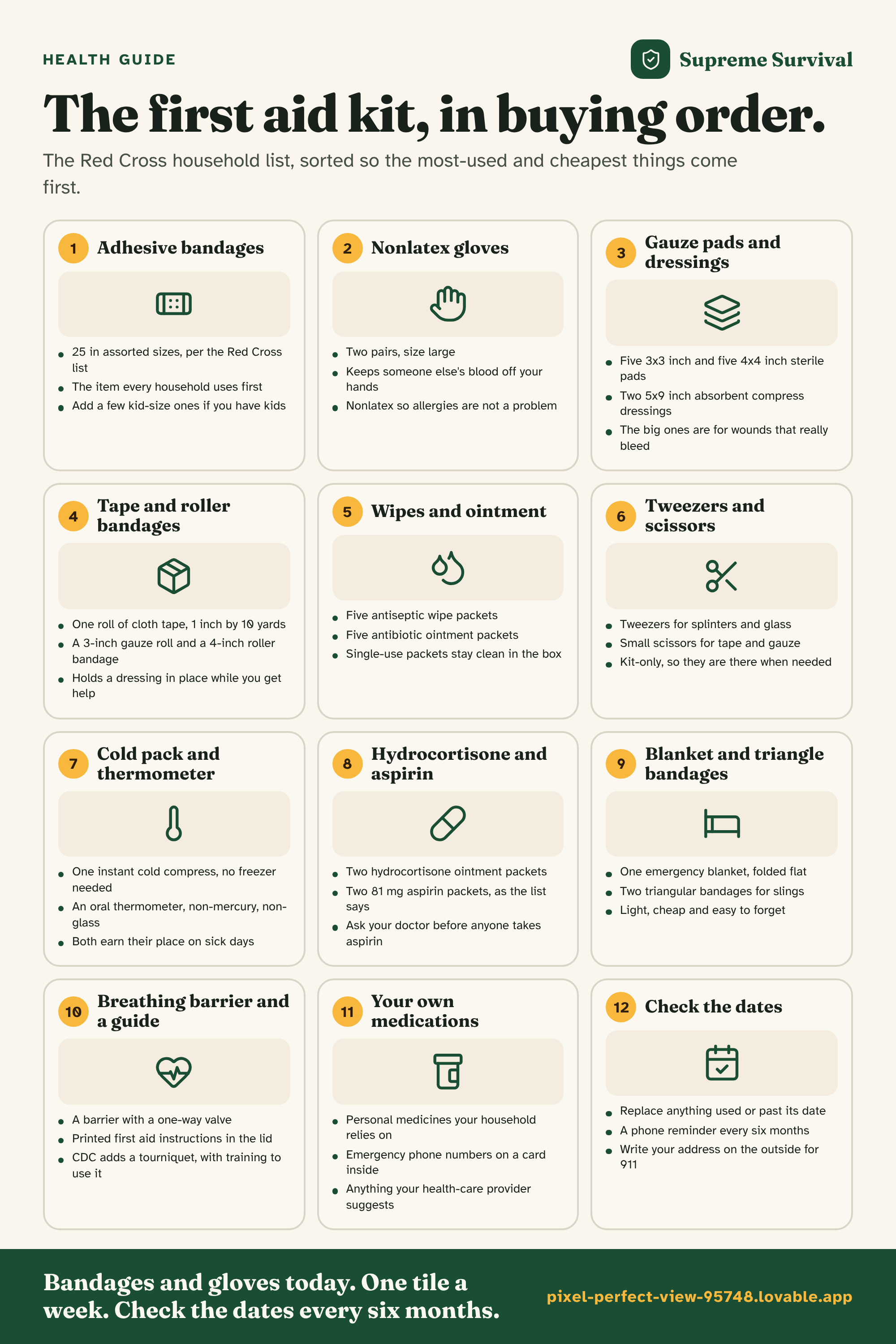
The American Red Cross publishes a first aid kit list for a family of four. This is that list in the order to buy it, starting with what gets used most, then the things you hope to need once. The last two tiles are the ones store-bought kits leave out: your own medications and a date check.
- 1
Adhesive bandages
- 25 in assorted sizes, per the Red Cross list
- The item every household uses first
- Add a few kid-size ones if you have kids
- 2
Nonlatex gloves
- Two pairs, size large
- Keeps someone else's blood off your hands
- Nonlatex so allergies are not a problem
- 3
Gauze pads and dressings
- Five 3x3 inch and five 4x4 inch sterile pads
- Two 5x9 inch absorbent compress dressings
- The big ones are for wounds that really bleed
- 4
Tape and roller bandages
- One roll of cloth tape, 1 inch by 10 yards
- A 3-inch gauze roll and a 4-inch roller bandage
- Holds a dressing in place while you get help
- 5
Wipes and ointment
- Five antiseptic wipe packets
- Five antibiotic ointment packets
- Single-use packets stay clean in the box
- 6
Tweezers and scissors
- Tweezers for splinters and glass
- Small scissors for tape and gauze
- Kit-only, so they are there when needed
- 7
Cold pack and thermometer
- One instant cold compress, no freezer needed
- An oral thermometer, non-mercury, non-glass
- Both earn their place on sick days
- 8
Hydrocortisone and aspirin
- Two hydrocortisone ointment packets
- Two 81 mg aspirin packets, as the list says
- Ask your doctor before anyone takes aspirin
- 9
Blanket and triangle bandages
- One emergency blanket, folded flat
- Two triangular bandages for slings
- Light, cheap and easy to forget
- 10
Breathing barrier and a guide
- A barrier with a one-way valve
- Printed first aid instructions in the lid
- CDC adds a tourniquet, with training to use it
- 11
Your own medications
- Personal medicines your household relies on
- Emergency phone numbers on a card inside
- Anything your health-care provider suggests
- 12
Check the dates
- Replace anything used or past its date
- A phone reminder every six months
- Write your address on the outside for 911
Bandages and gloves today. One tile a week. Check the dates every six months.
More guides

Home guide
A week without power.
How a normal household eats, stays clean, keeps cool or warm, and sleeps when the grid is gone for days.
Open the guide
Kit guide
The 72-hour family kit, item by item.
Everything a household needs for three days with no help, and nothing it does not.
Open the guide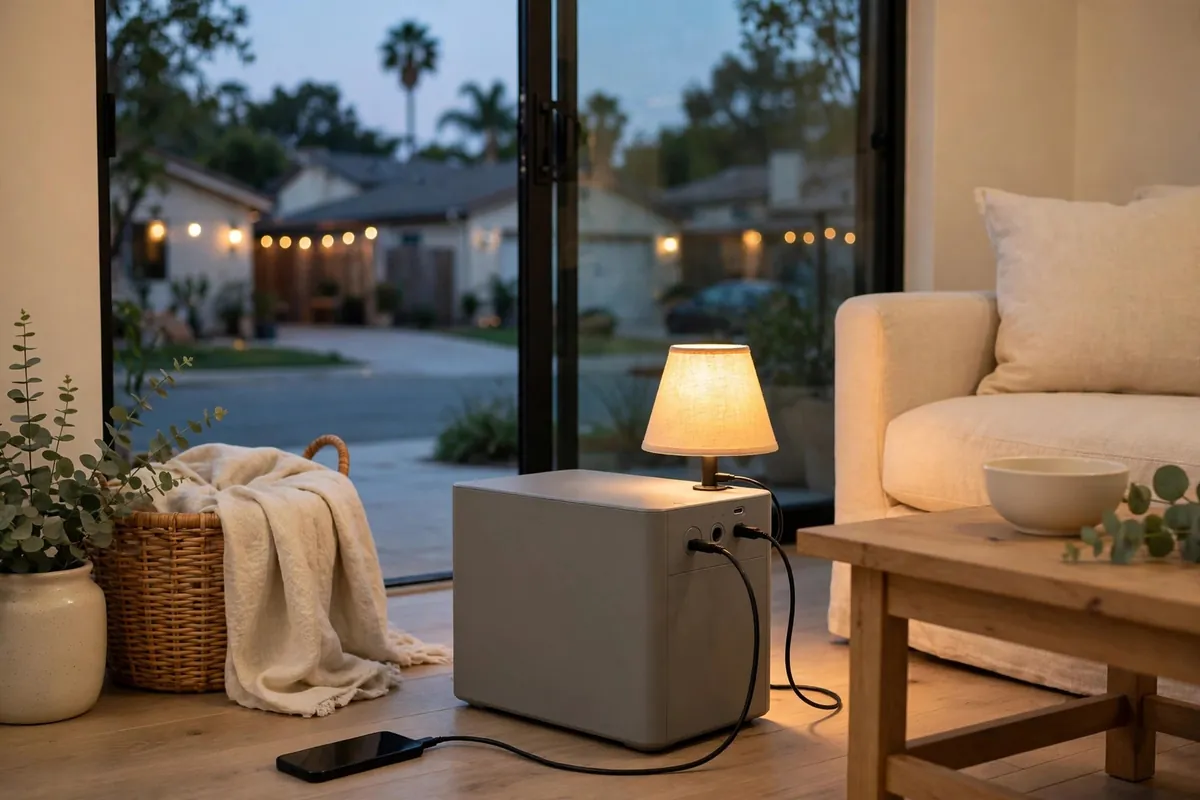
Gear Lab guide
Backup power, ranked by what actually works.
Twelve ways to keep phones, lights and a fridge going, from best to barely.
Open the guide