Health guide
The first five minutes of first aid.
What the Red Cross and the American Heart Association say to do first, before help arrives.
One page. Read it here, save the image to your phone, or print it for the fridge.
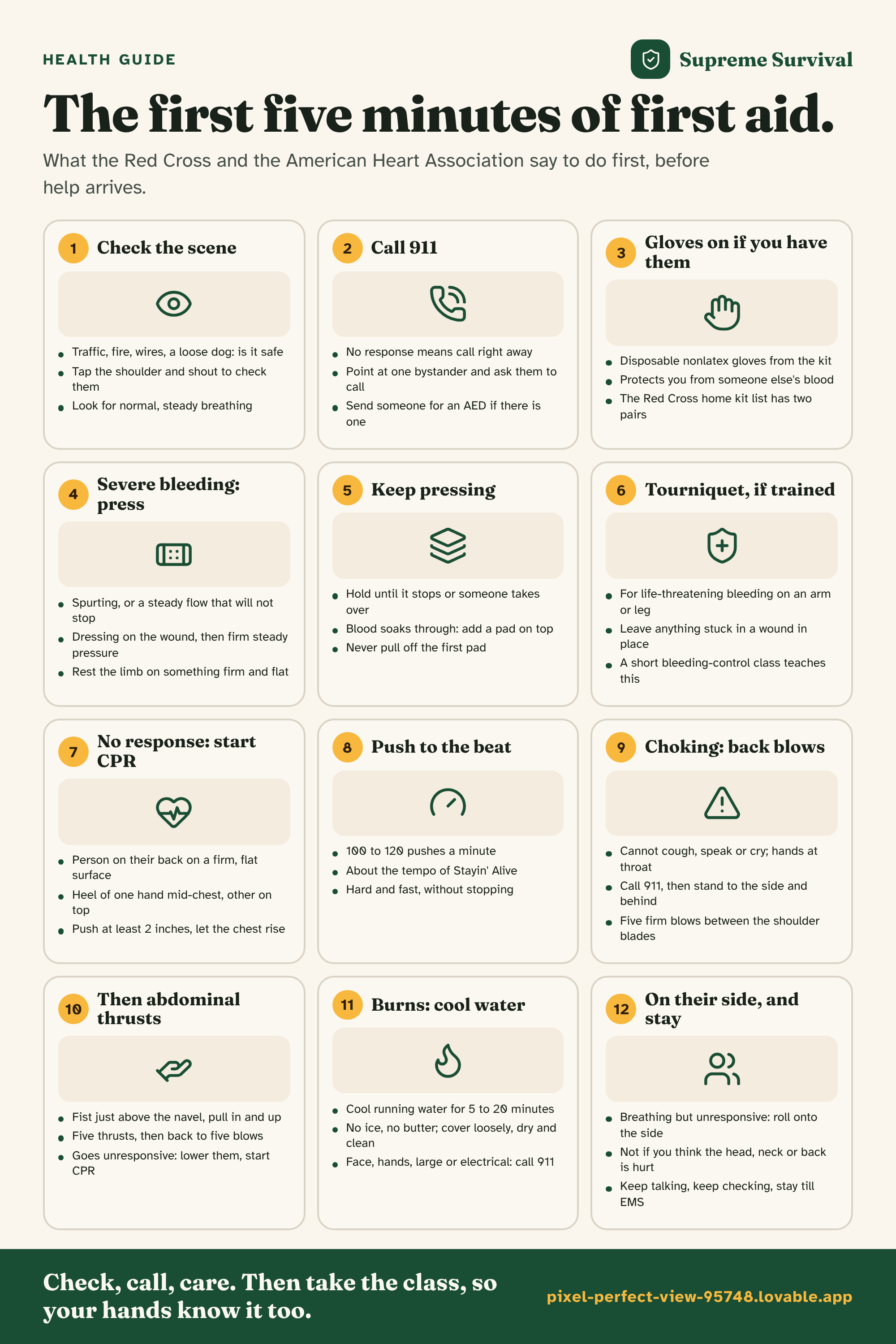
Most of first aid is the same few moves: make sure it is safe, get 911 coming, and do the one thing that keeps the person going until help arrives. These steps follow what the American Red Cross and the American Heart Association publish. A page is a reminder; a hands-on class is how you actually learn it.
- 1
Check the scene
- Traffic, fire, wires, a loose dog: is it safe
- Tap the shoulder and shout to check them
- Look for normal, steady breathing
- 2
Call 911
- No response means call right away
- Point at one bystander and ask them to call
- Send someone for an AED if there is one
- 3
Gloves on if you have them
- Disposable nonlatex gloves from the kit
- Protects you from someone else's blood
- The Red Cross home kit list has two pairs
- 4
Severe bleeding: press
- Spurting, or a steady flow that will not stop
- Dressing on the wound, then firm steady pressure
- Rest the limb on something firm and flat
- 5
Keep pressing
- Hold until it stops or someone takes over
- Blood soaks through: add a pad on top
- Never pull off the first pad
- 6
Tourniquet, if trained
- For life-threatening bleeding on an arm or leg
- Leave anything stuck in a wound in place
- A short bleeding-control class teaches this
- 7
No response: start CPR
- Person on their back on a firm, flat surface
- Heel of one hand mid-chest, other on top
- Push at least 2 inches, let the chest rise
- 8
Push to the beat
- 100 to 120 pushes a minute
- About the tempo of Stayin' Alive
- Hard and fast, without stopping
- 9
Choking: back blows
- Cannot cough, speak or cry; hands at throat
- Call 911, then stand to the side and behind
- Five firm blows between the shoulder blades
- 10
Then abdominal thrusts
- Fist just above the navel, pull in and up
- Five thrusts, then back to five blows
- Goes unresponsive: lower them, start CPR
- 11
Burns: cool water
- Cool running water for 5 to 20 minutes
- No ice, no butter; cover loosely, dry and clean
- Face, hands, large or electrical: call 911
- 12
On their side, and stay
- Breathing but unresponsive: roll onto the side
- Not if you think the head, neck or back is hurt
- Keep talking, keep checking, stay till EMS
Check, call, care. Then take the class, so your hands know it too.
Get the free 72-Hour Readiness Plan
More guides

Home guide
A week without power.
How a normal household eats, stays clean, keeps cool or warm, and sleeps when the grid is gone for days.
Open the guide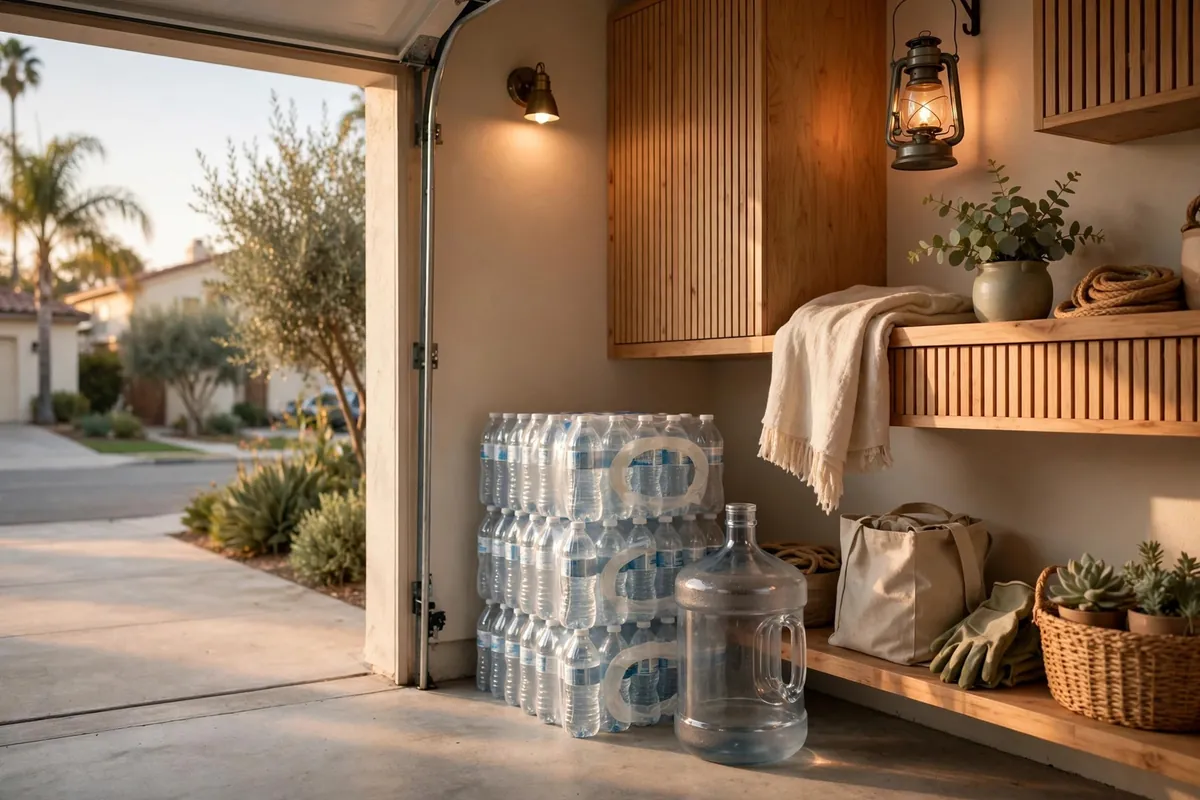
Kit guide
The 72-hour family kit, item by item.
Everything a household needs for three days with no help, and nothing it does not.
Open the guide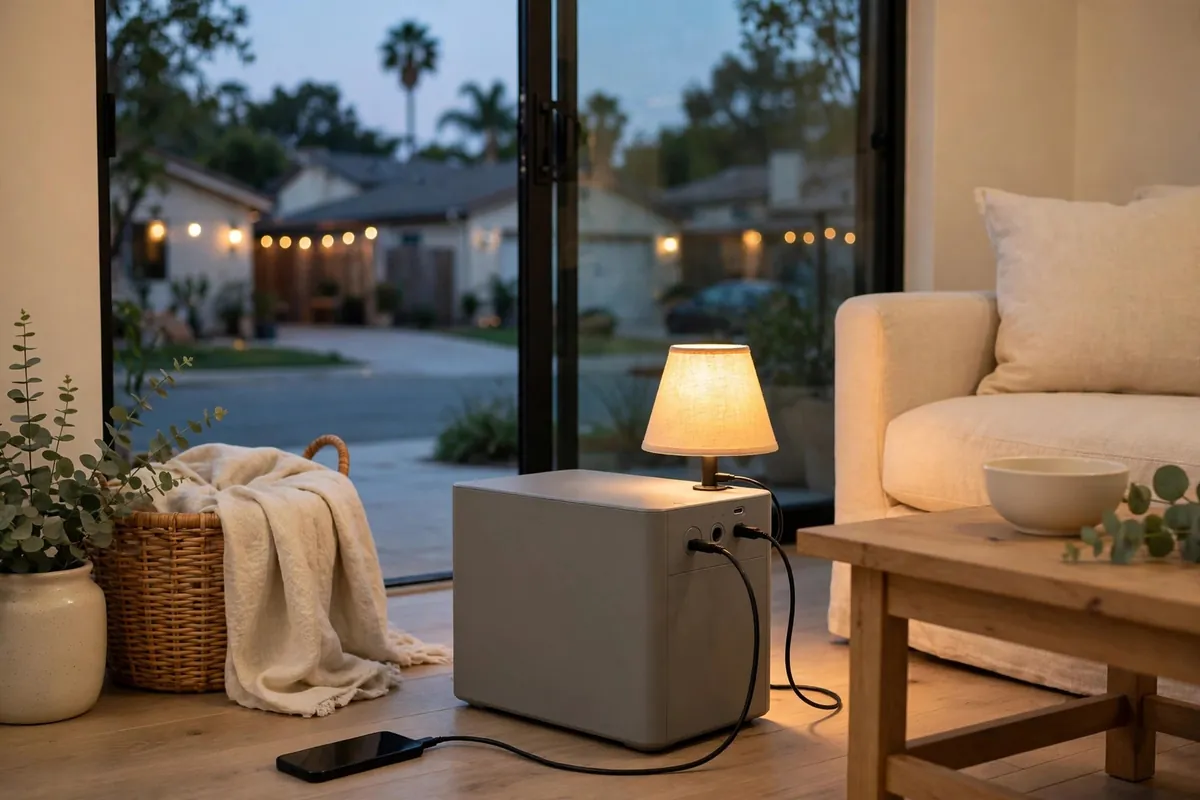
Gear Lab guide
Backup power, ranked by what actually works.
Twelve ways to keep phones, lights and a fridge going, from best to barely.
Open the guide