Car & budget
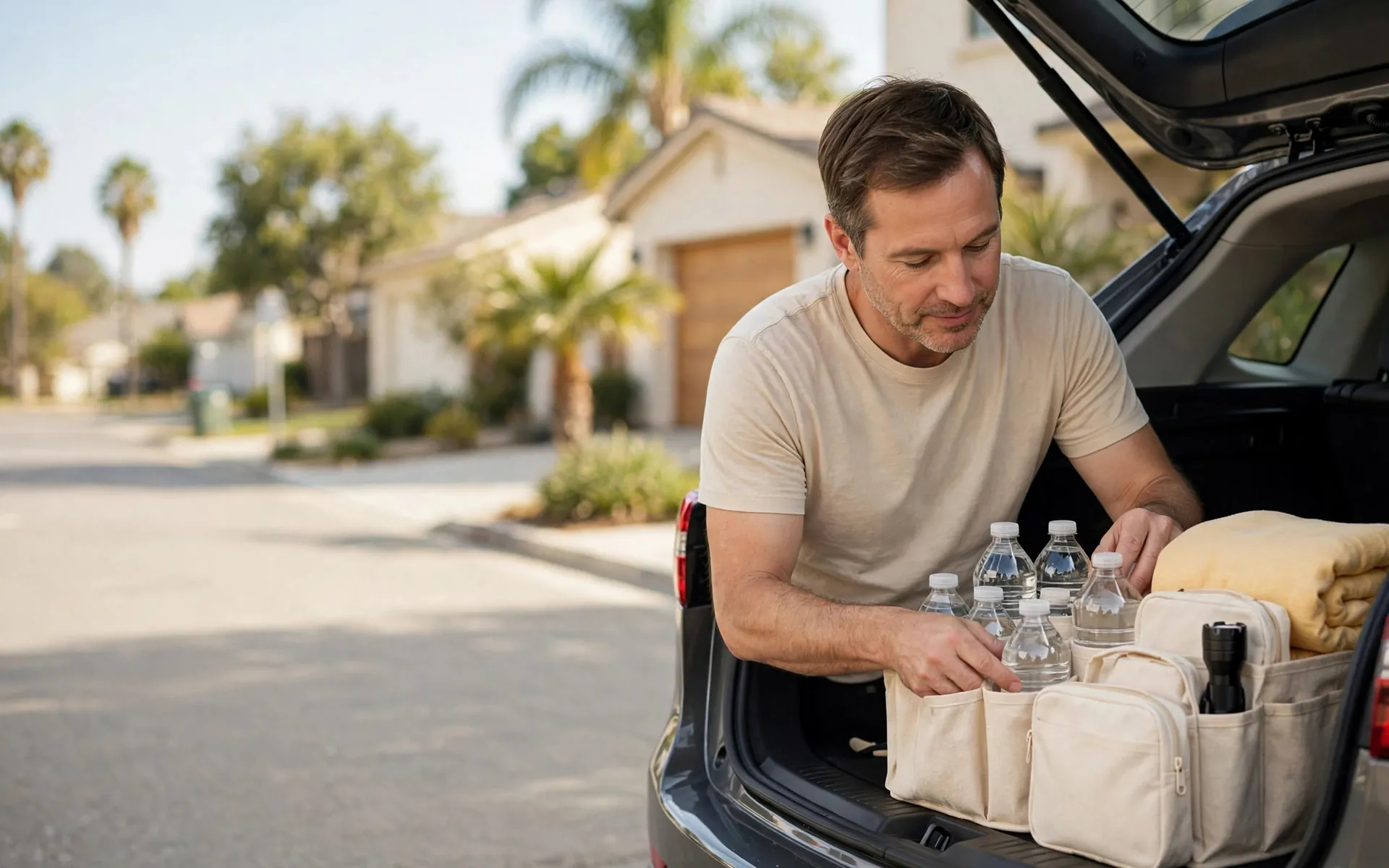
A car kit for under $50
Most emergencies find people in a car, on the way somewhere ordinary: a flat on the freeway shoulder, a dead battery in a dark parking lot, a two-hour standstill behind a wreck with a hungry kid in the back. A car kit is the cheapest readiness you can buy, and the first fifty dollars does most of the work.
This is the article version of the car kit in buying order guide, which you can also download as a one-page printable without giving an email. The order matters more than the list: the first thing you buy should be the thing you are most likely to need.
The first fifty dollars
| Order | Item | What it costs | Why it is first |
|---|---|---|---|
| 1 | Water, a few bottles | A couple of dollars | For you, a radiator, a wound, a kid who is suddenly thirsty |
| 2 | A car charger and a cable that stay in the car | About ten dollars | Your phone is your map, your flashlight and your tow truck |
| 3 | An LED flashlight with batteries in it | Five to ten dollars | Changing a tire or reading a map at night needs light, and phones die |
| 4 | A basic first aid kit | Ten to fifteen dollars | Bandages, tape, gauze, pain reliever; add any family medication |
| 5 | A fleece or wool blanket plus a foil space blanket | Under ten dollars at a thrift store | Warmth, shade, a kneeling pad on hot asphalt |
| 6 | Work gloves and a rag | A few dollars | Hot, sharp and dirty things happen on the shoulder |
That is the kit. Everything on this list fits in a shoebox or a tote in the trunk, and none of it goes bad quickly except the water, which you swap monthly in summer because a hot trunk degrades plastic bottles.
Prices are the typical range at a big-box or hardware store; your own store will differ a little. The point is that the whole first tier costs less than one tank of gas.
The next fifty, one item a month
Once the box exists, add one thing a month, in this order:
- A lithium jump pack. It starts the car without a second car and charges a phone. If the budget is tight, jumper cables do the first job and cost half as much. Charge the pack every few months.
- Basic tools: a multi-tool, pliers, a small adjustable wrench, duct tape, zip ties and a tire pressure gauge.
- A reflective warning triangle, or two. Being seen is the entire safety problem on a shoulder. A reflective vest if you can.
- A tire plug kit and a 12-volt inflator. Check the spare exists and has air, and know where the jack is before you need it in the dark.
- Food that survives heat: nuts, jerky, hard candy. Chocolate and most bars melt in a Southern California trunk by June.
- A paper map of the county and the state, with home and the nearest hospital marked. Phones drop signal in canyons and die in standstills; maps do not.
What stays out of the trunk
- Candles and anything with an open flame.
- Anything that cannot take heat: medications that need refrigeration, lithium batteries left loose, aerosol cans.
- Loose heavy objects. In a crash, a cast-iron flashlight on the rear deck becomes a projectile; keep the kit in a bag in the trunk or strapped down.
- Water in a bottle you have had for a year. Swap it.
If you drive kids
Add a day's worth of whatever keeps them calm: a small bag of snacks, a refillable bottle, a coloring book, a sweatshirt each. A standstill is an emergency to a four-year-old long before it is one to you. Add a spare pair of glasses if a kid wears them, and a copy of the school's pickup and reunification plan, because the day you need it is the day you cannot find the email.
The two habits that make the kit work
Gas: keep the tank above a quarter. Pumps need power, and evacuations happen on days when every station has a line. A full tank is also a phone charger and a heater.
Alerts: while you sit in the driveway with the kit, sign up for your county's emergency alerts and your utility's outage texts. It takes two minutes and it is the difference between a warning and a surprise.
Sources
Get the free 72-Hour Readiness Plan