Home safety
The 20-minute earthquake check every home needs
Most earthquake injuries at home are not from the building. They are from things inside it: a bookcase across a bed, a television off its stand, glass on the floor under bare feet, a water heater that tipped and pulled its gas line. All of that is fixable in an evening with a screwdriver, a wrench and a trip to the hardware store, and most of it costs less than dinner out.
Here are the four fixes that remove most of the risk, then the longer walk-through for when you have another twenty minutes. The one-page version is the 20-minute earthquake home check guide, and the full printable, with the home safety and shutoff pages, is the free Home Safety Checklist.
Fix one: strap the water heater
A water heater is a few hundred pounds of water on a narrow base, attached to a gas line. When it falls it can break that line and flood the garage, which is two emergencies at once. A strap kit is two metal straps that bolt into wall studs, top and bottom of the tank. It costs about what a pizza does and takes half an hour. In California, strapped heaters are required in new installations and sales for a reason.
If your heater is already strapped, check that the straps go into studs, not drywall, and that there are two, not one.
Fix two: anchor the tall furniture near beds
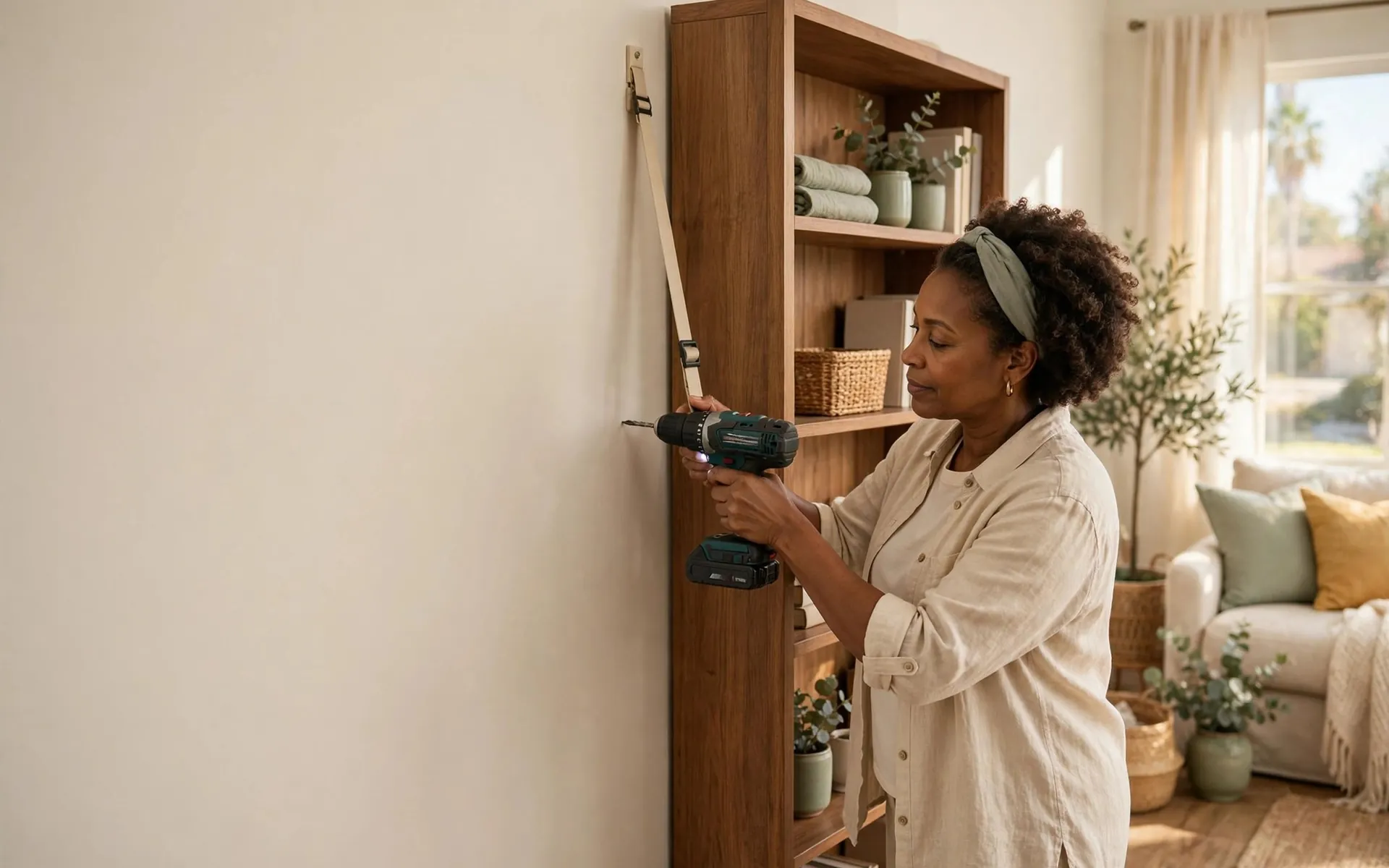
Bookcases, dressers, wardrobes and anything taller than it is wide. Furniture straps are a few dollars a pair; the rule is one strap into a stud per piece, and the bedrooms come first because that is where people are at 4am. Flat-screen televisions tip easily and are worth a strap kit of their own.
While you are in the bedroom: nothing heavy on a shelf above a bed. Move the framed mirror, the heavy picture and the box of books somewhere low.
Fix three: latch the kitchen
Upper kitchen cabinets open in strong shaking and empty onto the floor, which is where the glass on the floor comes from. Child safety latches on the upper cabinets keep dishes inside. A pack costs a few dollars and installing them takes ten minutes. The same afternoon, move the heavy pots and the glass jars to the lower cabinets, and light things up high.
Fix four: find the shutoffs and tag them
This is the one that most people have never done.
- Gas: the valve is at the meter, usually on the side of the house. A quarter turn with a wrench closes it. Hang the wrench on the meter with a zip tie so it is there in the dark. Shut the gas only if you smell it or hear hissing; turning it back on needs the utility.
- Water: the main is usually at the street in a box, or where the pipe enters the house. Tag it. A broken pipe floods a house fast, and shutting the main keeps the water heater's tank clean for drinking.
- Electricity: find the breaker panel, know the main switch and hang a flashlight beside it.
Show every adult in the house all three. Write the locations on the household plan page on the fridge.
The rest of the walk, in the order of what hurts people
- Mirrors and pictures on closed hooks, not open nails, and nothing heavy over a bed or couch.
- Earthquake putty under the small heavy things on shelves: the vase, the speaker, the lamp.
- Shoes and a flashlight by every bed, including the kids' beds. Broken glass is the most common injury, and it happens in the first ten seconds of walking.
- The chimney. Tall brick chimneys are the common structural failure in older homes; have an old one inspected, and keep beds away from the wall it stands on.
- Flexible connectors on the gas appliances, which a plumber can fit in an hour.
- The safe spots, said out loud once: under the dining table, or against an interior wall away from windows. Drop, cover and hold on, every time, every aftershock.
What this does not cover
Bolting the house to its foundation and bracing a cripple wall are real retrofits that matter for pre-1980 homes, and they cost real money. California's Earthquake Brace and Bolt program offers grants for eligible homes, and that is the next conversation after this one. The evening fixes above are what you can do today, and they are where most of the injuries come from.
Sources
Get the free 72-Hour Readiness Plan