Scenario
Twenty minutes to evacuate
Scenario guide
Twenty minutes to evacuate.
What actually goes in the car, in the order it matters.
- 1
People and pets first
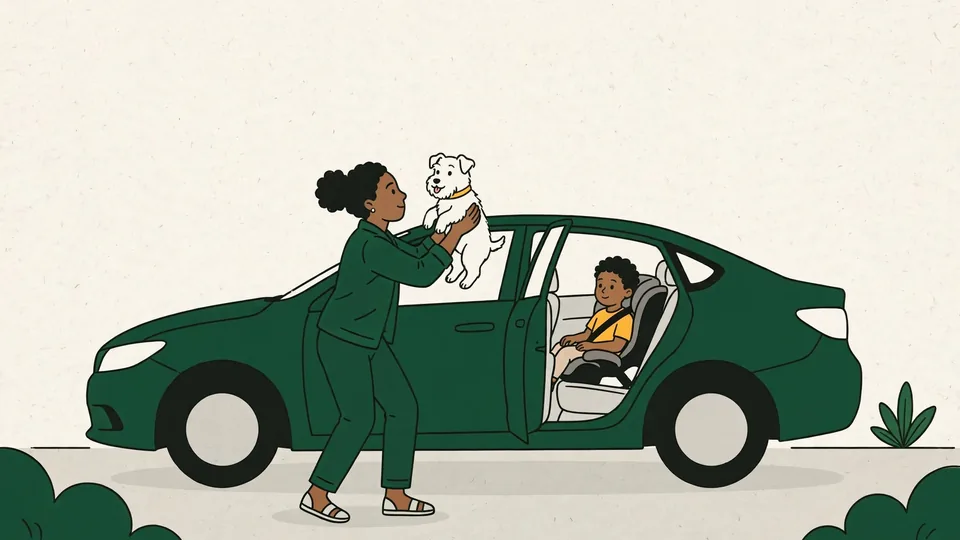
- Everyone in the car before anything else
- Carriers, leashes, a bag of pet food
- Agree the meeting point out loud
- 2
Medications and devices
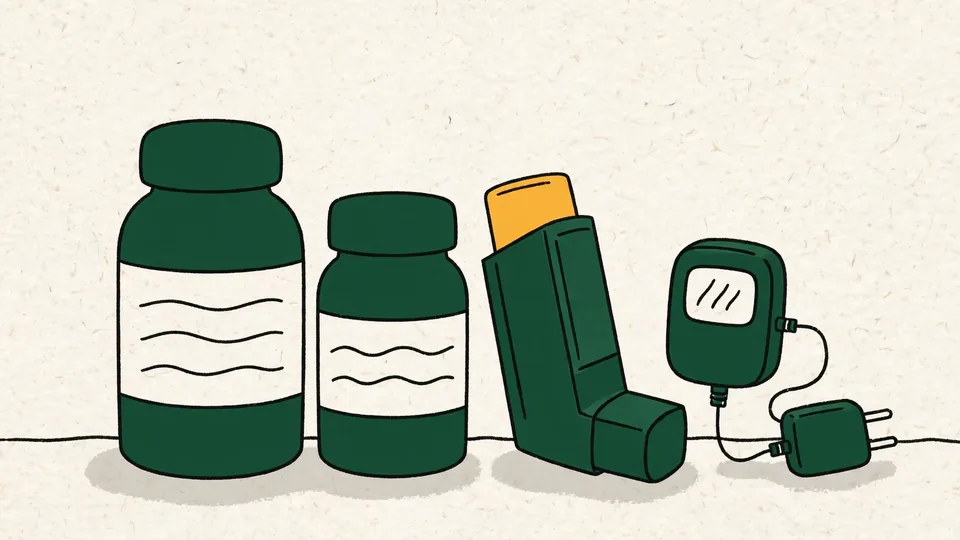
- Seven days minimum, in original bottles
- CPAP, inhalers, glucose supplies
- Chargers for anything medical
- 3
The document folder
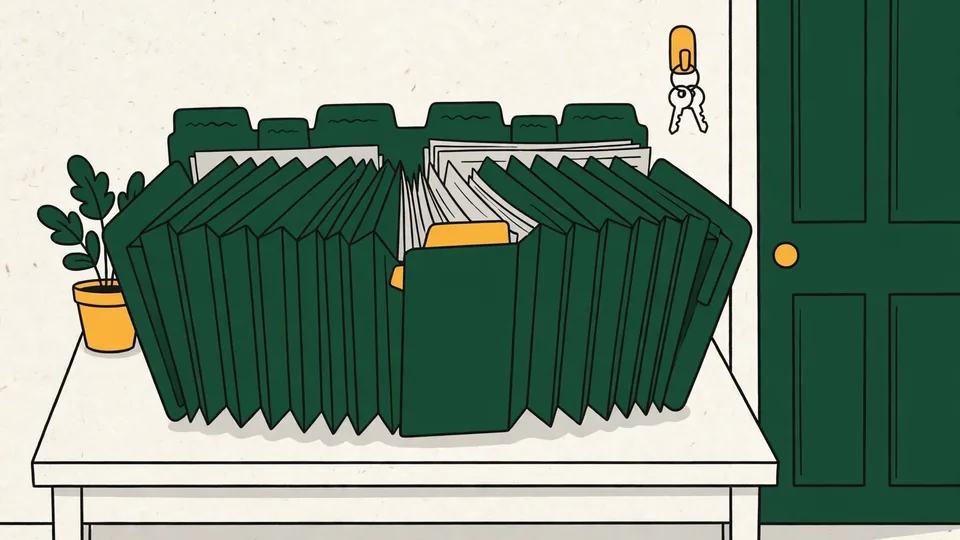
- IDs, insurance cards, deed or lease
- Or clear photos already on your phone
- Keep it by the door, not in a drawer
- 4
Phone and power
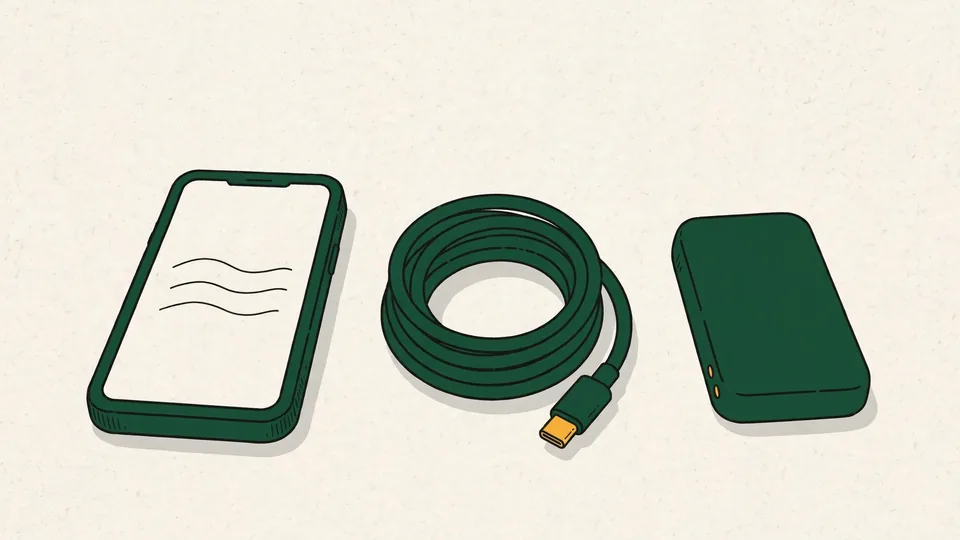
- Phones, cables, a charged battery bank
- Car charger lives in the car
- Download the evacuation map offline
- 5
Cash in small bills

- ATMs and card readers go down with the power
- Enough for gas, food and a motel night
- Twenties and smaller
- 6
Water
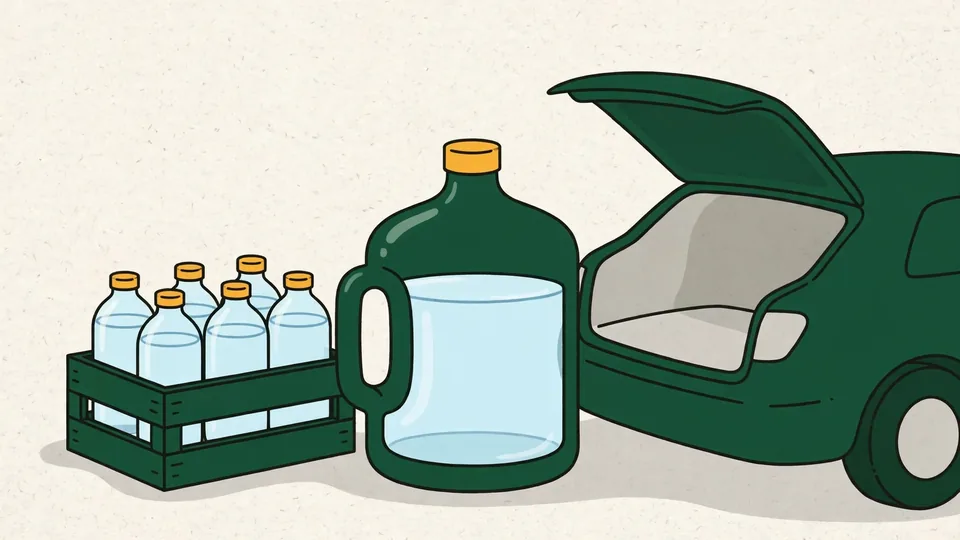
- One gallon per person per day
- Three days if you can lift it
- Pets drink too
- 7
Food that needs no cooking

- Bars, nut butter, crackers, fruit cups
- A manual can opener if you pack cans
- Skip anything that needs a stove
- 8
Three days of clothes
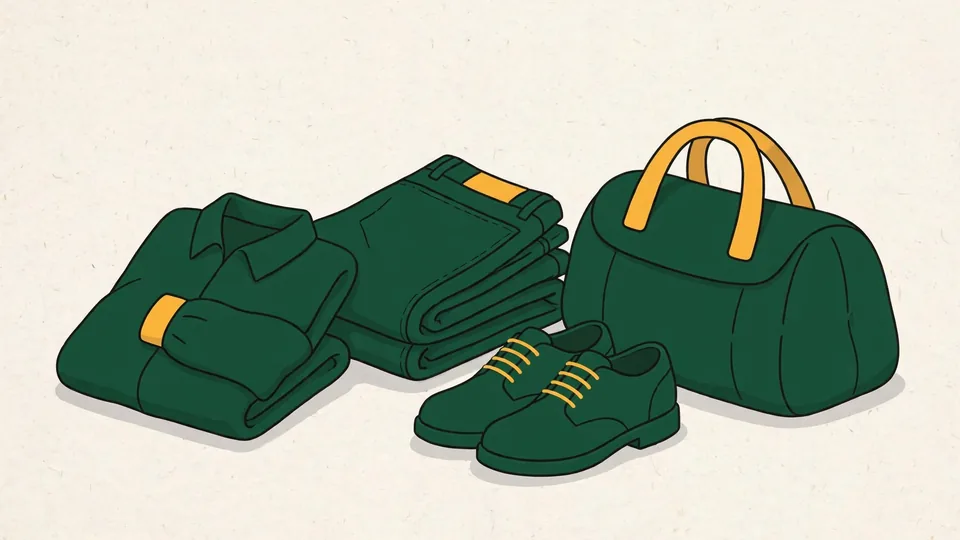
- Closed-toe shoes on your feet, not in a bag
- Long sleeves and pants for ash and brush
- A layer for the cold night
- 9
Masks and glasses
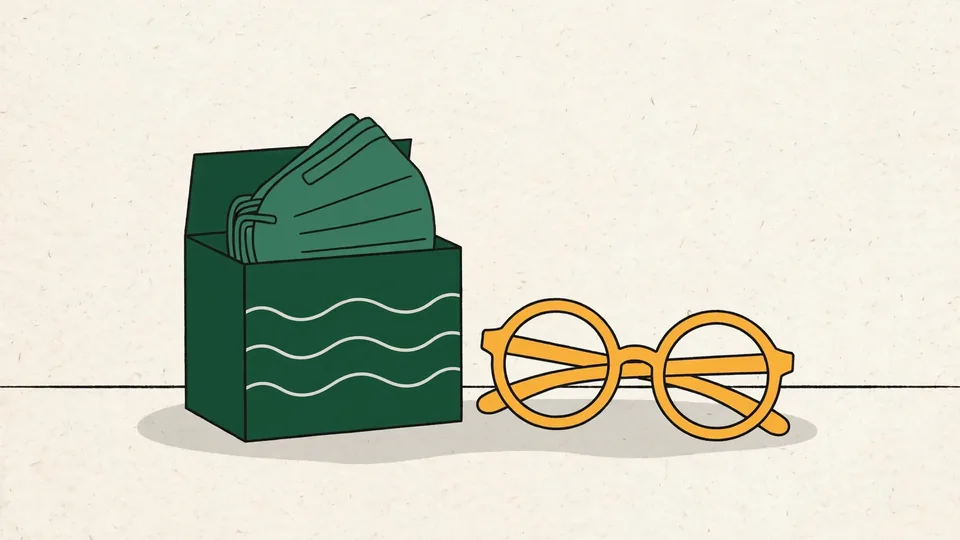
- N95s for smoke, one per person per day
- Glasses instead of contacts
- A wet bandana does not replace a mask
- 10
Light and news
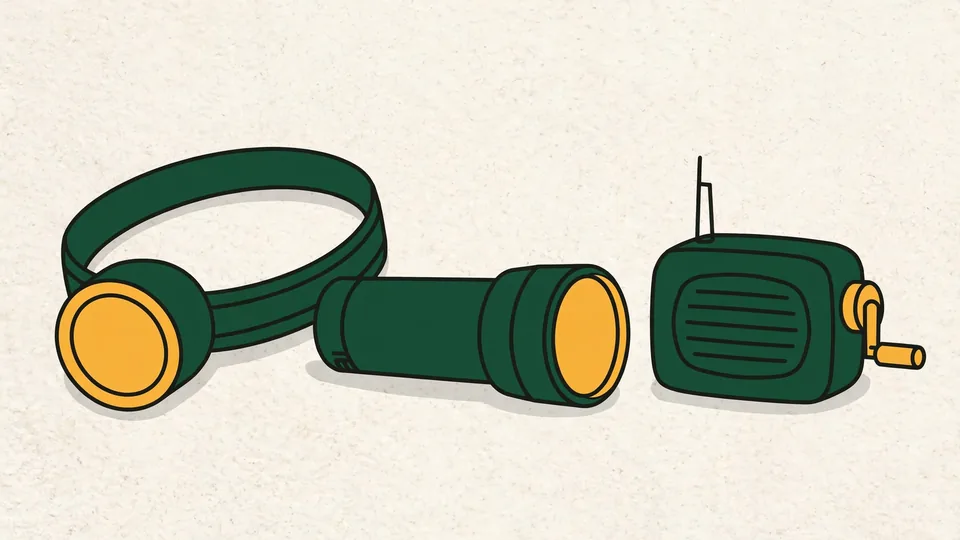
- Headlamp or flashlight with spare batteries
- A battery or crank radio
- Your phone is not the backup
- 11
First aid kit
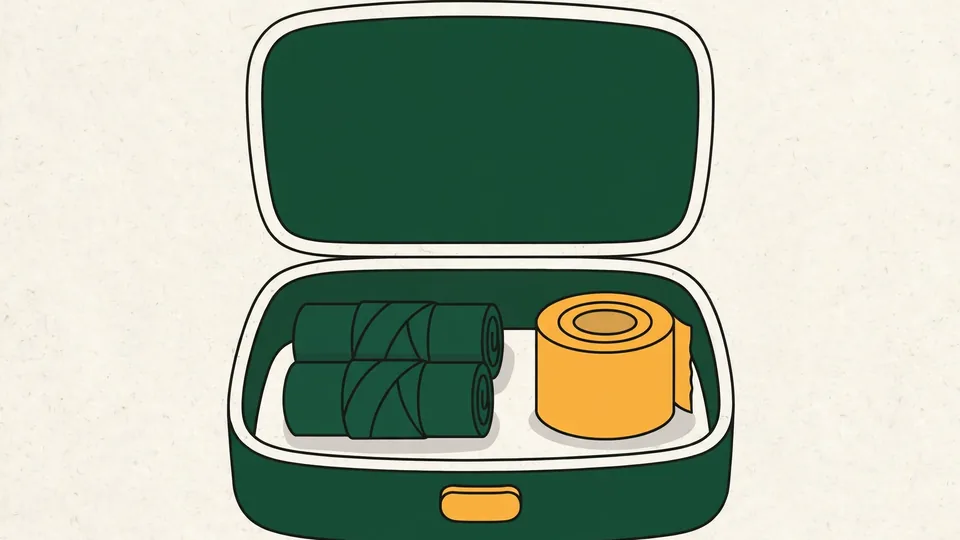
- Bandages, tape, pain reliever, tweezers
- Any allergy medication the family uses
- Check it twice a year
- 12
Irreplaceables, last

- Photos, the hard drive, one keepsake
- Only if everything above is already in
- Nothing on this tile is worth a minute
The order is the plan. People, meds, papers, then everything else.
It is a Tuesday afternoon in October. The wind has been wrong all day. Your phone buzzes with a county alert: an evacuation warning for your zone. Not an order yet. A warning. Here is the next twenty minutes, in the order it goes, and what you do differently if you prepared.
Minute 0 to 2: read it twice, then decide
A warning means get ready now and leave early if you can. An order means leave now. CAL FIRE's Ready, Set, Go puts it plainly: anyone who needs extra time (older adults, young kids, pets, anyone with a medical need) should go on the warning, not wait for the order. If that is your household, you are leaving. Decide it in the first minute and say it out loud so nobody argues with it at minute twelve.
Check the zone on the county's alert page or app, not on social media. Note the evacuation route and where the temporary evacuation point is. Text one line to your out-of-area contact: "Fire warning, we are packing, will text when we leave."
Minute 2 to 10: people, meds, papers, phone
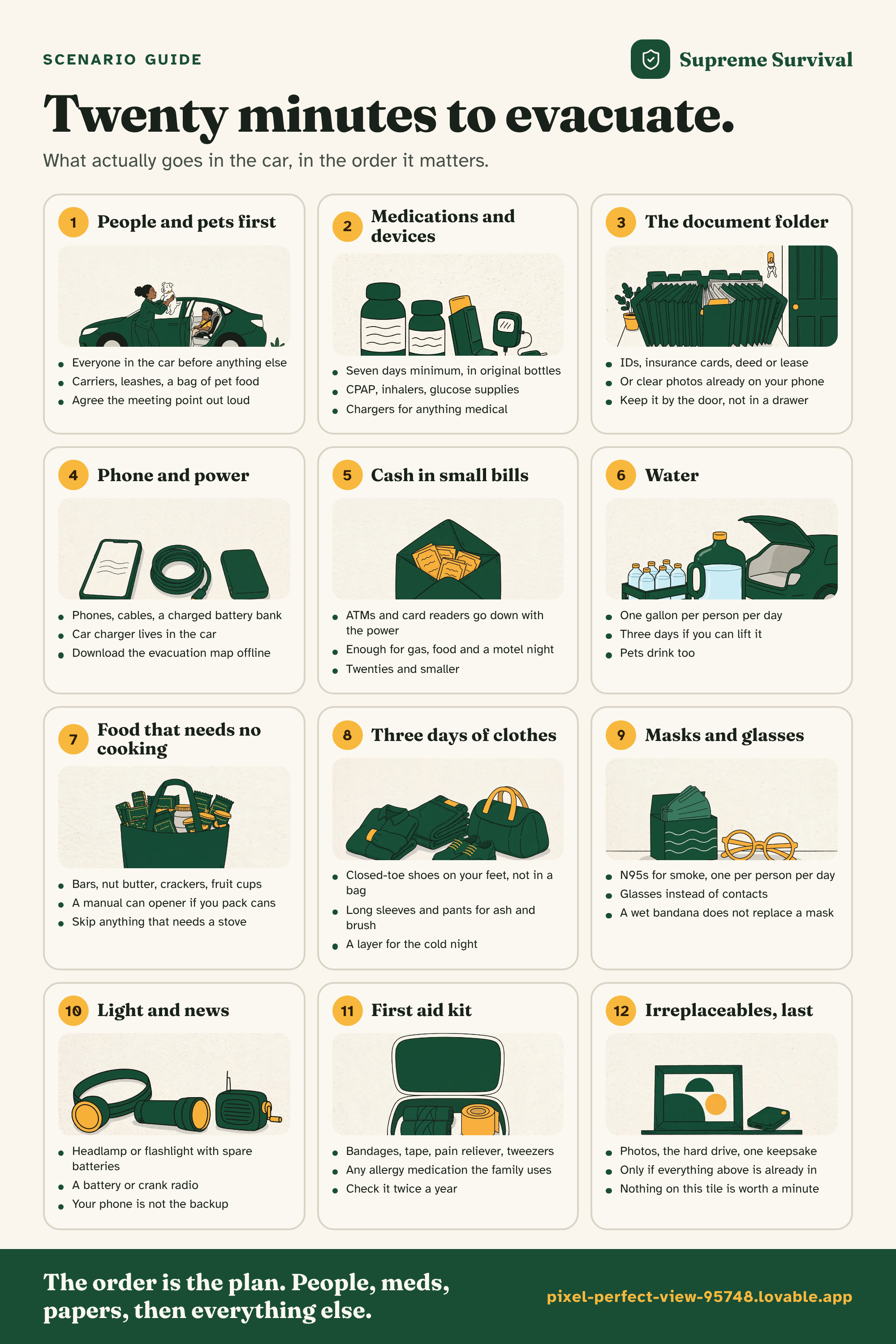
The order is the plan. Work top to bottom and stop when the time runs out, not when the list does.
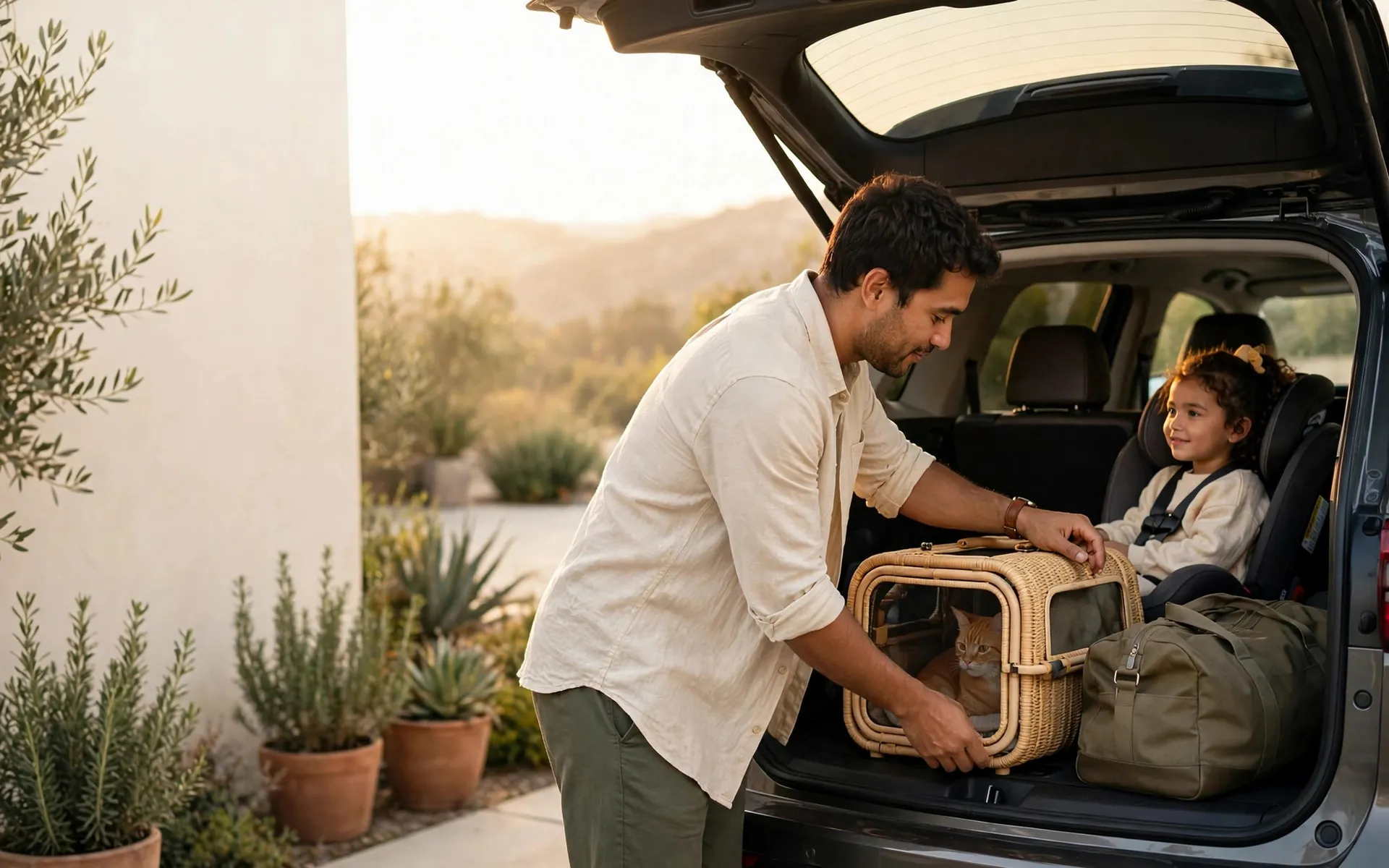
- People and pets into the car first, or at least into one room by the door with shoes on. Carriers out and open. Agree the meeting point out loud in case anyone is separated.
- Medications and devices: seven days in original bottles, the inhaler, the CPAP, the chargers for anything medical.
- The document folder. If you built it, it is by the door and this step takes ten seconds. If you did not, take clear photos of IDs and insurance cards with your phone and keep moving.
- Phones, cables, the power bank, and a download of the evacuation map in case signal drops in the canyon.
If you are at minute ten and the kit is already in the trunk, you are done with the hard part.
Minute 10 to 18: the things that make the next three days easier
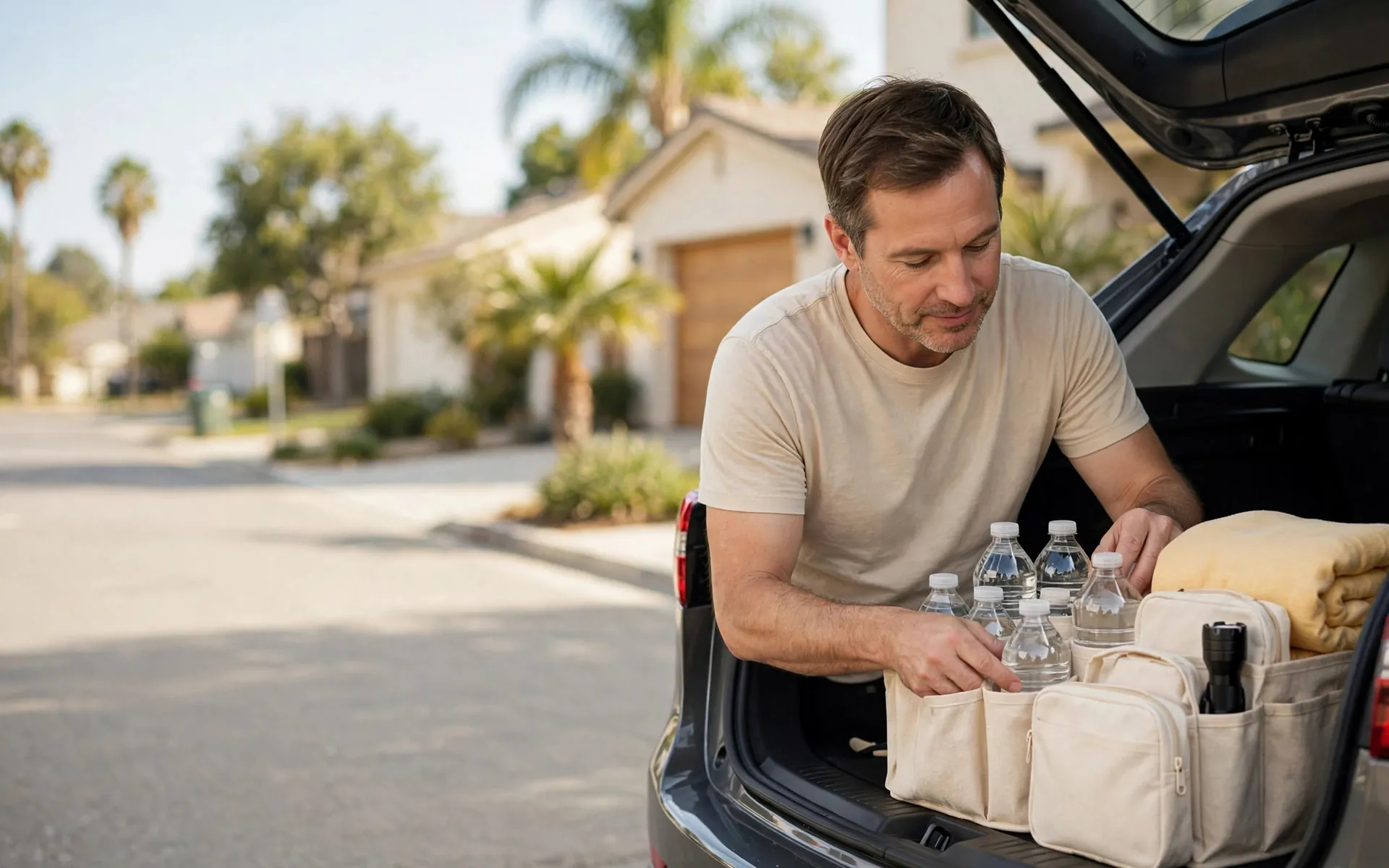
Cash in small bills. Water, a case if you can lift it. Food that needs no cooking. Three days of clothes with closed-toe shoes on your feet and long sleeves for ash. N95 masks and glasses instead of contacts. A flashlight and the radio. The first aid kit. Then, and only then, the irreplaceables: the photos, the hard drive, one keepsake. Nothing on that last tile is worth a minute of the first ten.
Shut the windows, leave the lights on so firefighters can see the house in smoke, and leave the gate unlocked. Do not turn off the gas unless you are told to; relighting pilot lights afterwards is a job for the utility.
Minute 18 to 20: go
Windows up, headlights on, slow. Follow the route the alert gave you even if it looks longer; the short way may be where the fire is. Do not drive into smoke you cannot see through. If the road is blocked, turn around early rather than late.
Text the out-of-area contact one line when you leave, and one line when you arrive. Phone calls jam on fire days; texts get through.
Where you go
A friend outside the fire zone, a pet-friendly hotel on the route, or the county's temporary evacuation point, in that order of comfort. Most evacuation shelters cannot take pets, which is why the pet evacuation kit guide asks you to decide where the animals go before the day arrives.
What changes if you prepared
The difference between a prepared household and an unprepared one is not calm; everyone is scared. The difference is that the prepared household spends its twenty minutes loading, not deciding. The kit is already in the trunk. The folder is by the door. The pets' carriers are out. The route is on the fridge. Twenty minutes becomes eight, and the other twelve go to helping the neighbor who is still looking for the cat.
The preparation is one weekend: the 72-Hour Readiness Plan walks through it, and the one-page document folder and car kit guides cover the two pieces that save the most minutes on the day.
Sources
Get the free 72-Hour Readiness Plan