Health and First Aid
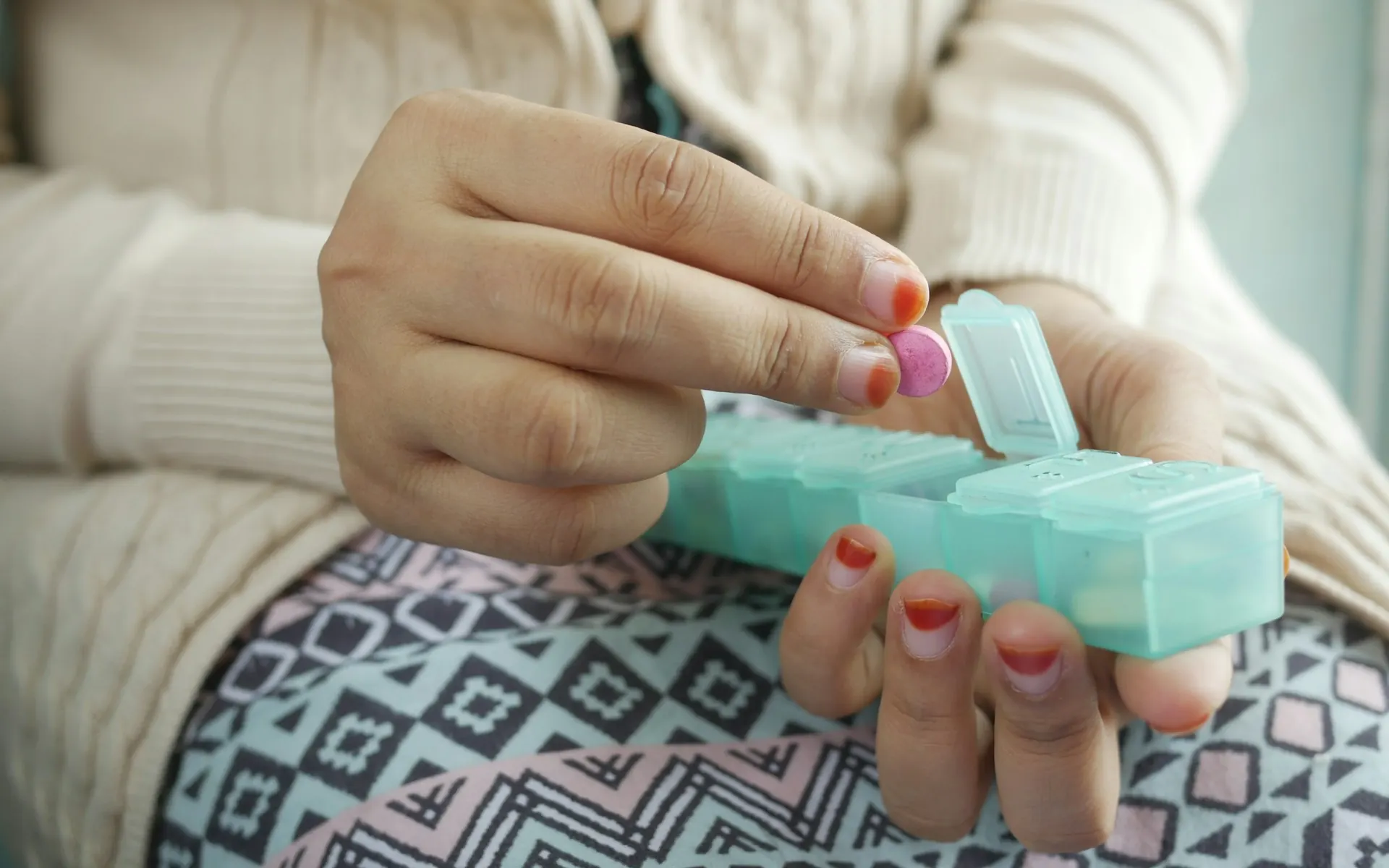
Keeping a week of medications on hand.
The American Red Cross puts a 7-day supply of medications on its emergency kit list, and the reason is simple. After an earthquake, a fire evacuation or a long outage, the pharmacy may be closed, your doctor's office may be dark, and the bottle at home may be the only supply you have. Water and flashlights are easy to replace. A daily prescription is not.
A week on hand is not a stockpile. It is a little margin, a written list, and a plan for anything that lives in the fridge. Pair this with the first aid kit, in buying order, which covers the bandages and the personal-medication slot, and the first five minutes of first aid for what to do before help arrives.
Start with two phone calls
The extra week comes from your pharmacy, not from changing how you take anything. The CDC says to talk to your doctor or pharmacist about building an emergency supply.
Then call the number on your insurance or prescription card. Ask whether your plan allows an early or extra refill, and what it does in a declared emergency. Only the plan can tell you its own rules. The FDA's preparedness guidance says to know how much you have and to get early refills when pharmacy access may be disrupted, which in Southern California means fire season and any time a big storm is in the forecast.
| Who to ask | What to ask |
|---|---|
| Doctor | Can I keep an extra week of this medicine? Is a 90-day supply an option? |
| Pharmacist | How should this be stored? What happens to it in heat or without a fridge? |
| Insurance plan | How early can I refill? Is there an exception in a declared emergency? |
What California allows in an emergency
California's pharmacy law has two provisions worth knowing, as summarized by the state Board of Pharmacy.
Under Business and Professions Code section 4064, a pharmacist may refill a prescription without the prescriber's approval when the prescriber cannot be reached and, in the pharmacist's judgment, going without would interrupt your care and seriously affect your well-being. The pharmacist has to try to reach the prescriber first, tell you it was refilled this way, and notify the prescriber afterward.
Under section 4062, during a declared federal, state or local emergency, a pharmacist may in good faith furnish medication in a reasonable quantity without a prescription, keep a record, and notify your doctor as soon as possible.
Health plans can also be told to loosen their rules. During the 2025 Southern California fires, the Department of Managed Health Care directed plans in Los Angeles and Ventura counties to suspend refill limits and let affected members fill prescriptions at in-network or out-of-network pharmacies at their usual in-network cost. That was one emergency's directive, not a standing rule. The week in your cabinet is still the plan.
The medication list
A list lets a different pharmacy, an urgent care or a shelter help you. The CDC suggests it include each prescription medicine, the diagnosis it treats, the dosage and how often you take it, any medical supplies you need, and your allergies. The FDA adds what each medicine is for.
Keep it in three places:
- A printed copy in your go-bag or document folder. The Red Cross lists a medication list and medical information among the documents to keep copies of.
- A photo on your phone, along with a photo of each pharmacy label, which shows the pharmacy, the prescriber and the prescription number.
- A copy with someone you trust outside the house.
Put copies of your insurance and prescription cards with it. Ready.gov suggests copies of Medicare, Medicaid and other insurance cards in your kit.
Storing it in the heat
MedlinePlus, from the National Library of Medicine, says heat, air, light and moisture can damage medicines. Store them somewhere cool and dry, away from the stove, the sink and hot appliances. Two common spots are poor choices: the bathroom cabinet, because of shower steam, and the glove compartment of a car. Keep medicines in their original containers, and ask your pharmacist about any specific storage instructions.
For the emergency week, that means a labeled pouch in a closet, not the garage or the trunk. If flooding is possible where you keep it, the FDA suggests a water-tight container. Do not use medicine that has changed color, texture or smell, even before its date.
Refrigerated medicine in an outage
The CDC suggests keeping a cooler and chemical ice packs ready for medicines that need to stay cold. For a planned shutoff, our guide to power for medical devices when the lights go out covers the rest of the house.
If the power has been out for a day or more, the CDC says to throw away medicines that should be refrigerated unless the label says otherwise. The exception is a medicine someone's life depends on: use it only until a new supply is available, then replace it as soon as possible.
Insulin has specific FDA guidance. Opened or unopened vials and cartridges can be kept unrefrigerated between 59°F and 86°F for up to 28 days and still work. Keep it as cool as you can and out of direct heat and sun. If you use ice, do not let it freeze, and do not use insulin that has frozen. Replace any that went through extreme temperatures once you can. For anything else in the fridge, ask your pharmacist how long it lasts out of the cold.
Keep the week fresh
The CDC's first aid kit guidance suggests a phone reminder to check supplies every six months. Use the same reminder for the emergency week: check the dates, move the older bottle into daily use and put the newer one in the pouch, and update the list whenever a prescription or dose changes.
Sources
- American Red Cross: Survival kit supplies
- CDC: Prescriptions (Prepare Your Health)
- FDA: Emergency preparedness, keeping medications safe
- FDA: Insulin storage and switching between products in an emergency
- CDC: Refrigerated drugs
- MedlinePlus: Storing your medicines
- California State Board of Pharmacy: Emergency dispensing and refills (B&P Code 4062 and 4064)
- California Department of Managed Health Care: APL 25-001, Southern California fires
- Ready.gov: Older adults
- CDC Public Health Matters: Must-haves for your first-aid kit
Get the free 72-Hour Readiness Plan